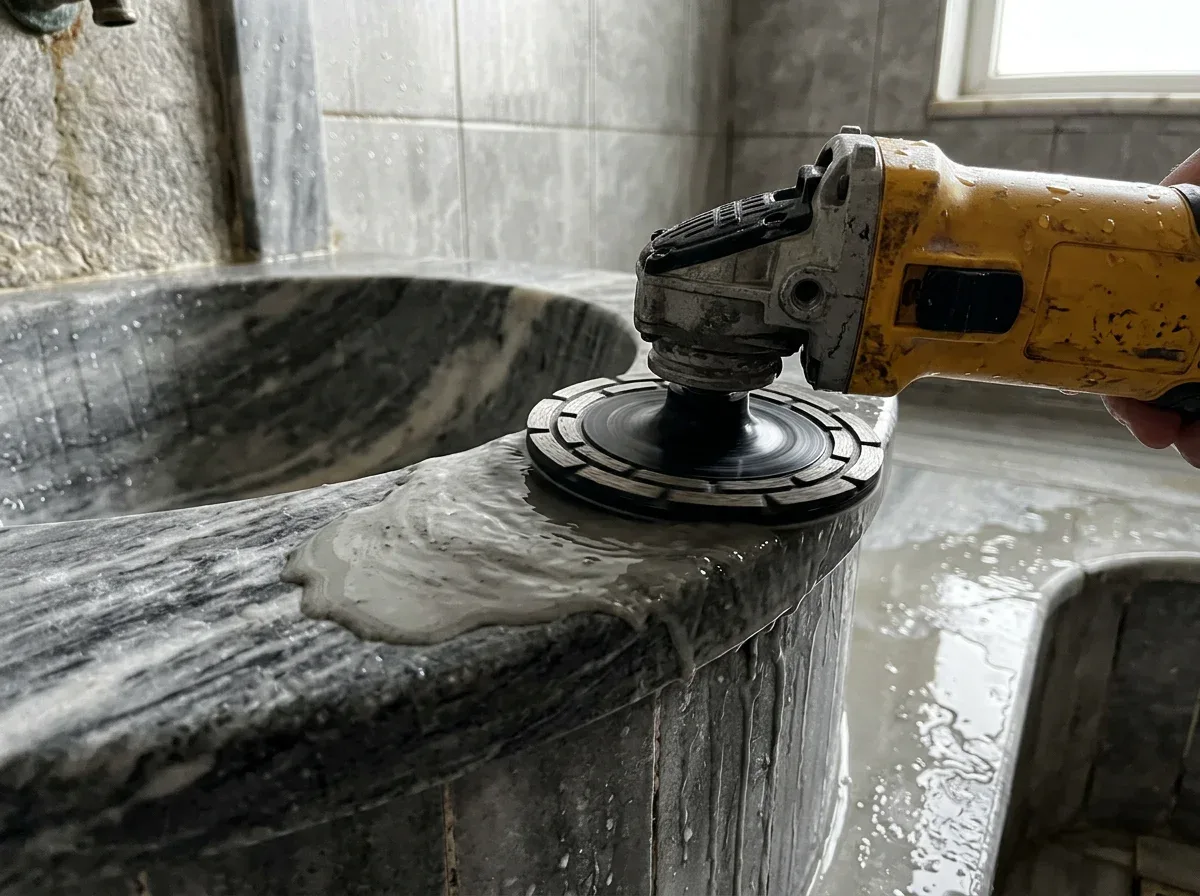
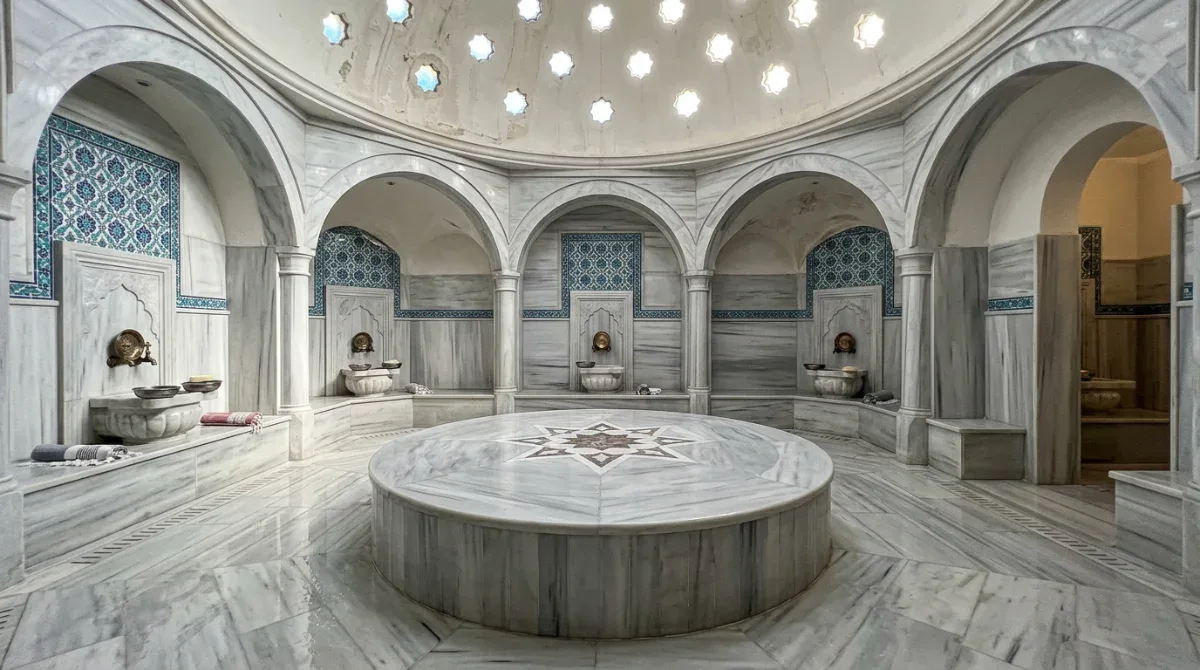
Slippery Hammam Floors and How to Fix Them
In short: The floor in a hammam is constantly wet, and soap, foam and oil mix into it; if the marble is also polished, the risk of slipping increases significantly.
In this article, we separate the factors that make a hammam floor slippery, explain what can be done about each one, and show how a lasting solution is achieved on the surface.
Slipperiness Has Several Causes, Not Just One
Slipperiness on a hammam floor is usually blamed on a single cause: "marble is slippery." Yet the same marble behaves very differently under different conditions. The main factors that determine slipperiness are:
1. The Surface Itself
When a polished, mirror-like marble surface gets wet, a thin film of water forms under the foot and grip is reduced. In hammams, the floor, the area around the basins and the area around the central heated marble slab (göbek taşı) become "polished" over the years by foot traffic and cleaning; even a stone that was matte when first laid can become shiny and slippery over time.
2. Soap and Foam Film
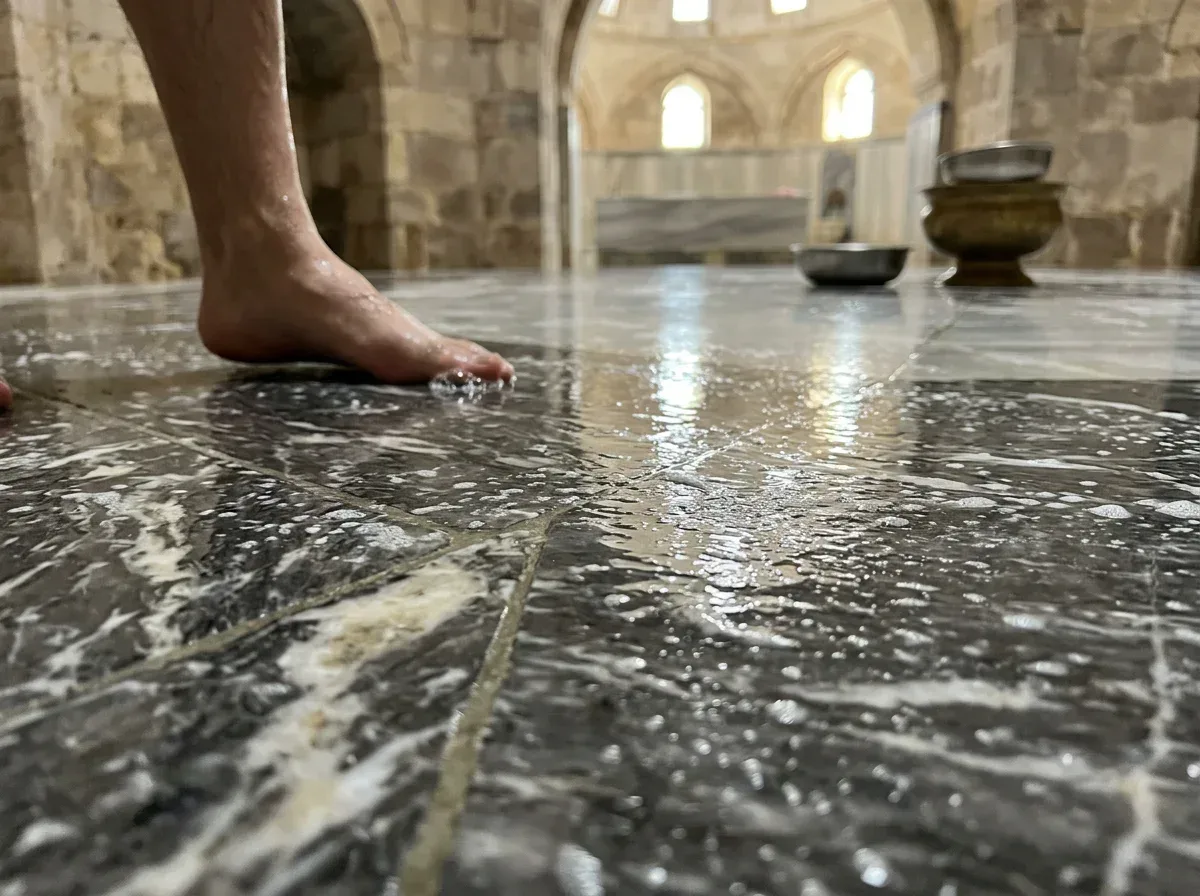
Hammam soaps and foams leave a very thin but stubborn film on the floor. When this film combines with water, it forms a slippery layer. When soap residue combines with hard water, it turns into a gray-white deposit.
3. Oils
Massage oils, products used after exfoliation and body lotions are carried onto the floor. Oil is the substance that increases slipperiness the most, and it cannot be removed with water alone.
4. Limescale and Mineral Buildup
As hard water evaporates, limescale builds up on the surface. A thin layer of limescale sometimes creates a rough texture and sometimes a glassy, slippery one; it also traps soap and dirt, making cleaning harder.
5. Wrong Cleaning Products
"Shine-enhancing" or "polish-effect" cleaning products leave a thin glossy film on the floor, which increases slipperiness when wet. Acidic products, on the other hand, etch the stone, leaving some spots rough and others shiny and creating an uneven surface.
Cleaning First: No Decision on the Surface Before the Film Is Removed
The first step in fighting slipperiness is to remove the film on the surface completely. Without removing the layer of soap, oil and limescale, the true behavior of the stone cannot be understood.
- For oil and soap: Alkaline cleaners with degreasing properties that are suitable for natural stone and a machine with a soft brush are used; the surface is then rinsed with plenty of water and dried.
- For limescale: Acidic descalers are not used on marble; thickened limescale is removed mechanically, with suitable pads and, when necessary, light honing.
Sometimes this deep cleaning alone reduces slipperiness noticeably, because the problem is not the stone but the film on top of it.
Lasting Solution: Changing the Surface
If the stone still feels slippery when wet after the film has been removed, the texture of the surface needs to be changed.
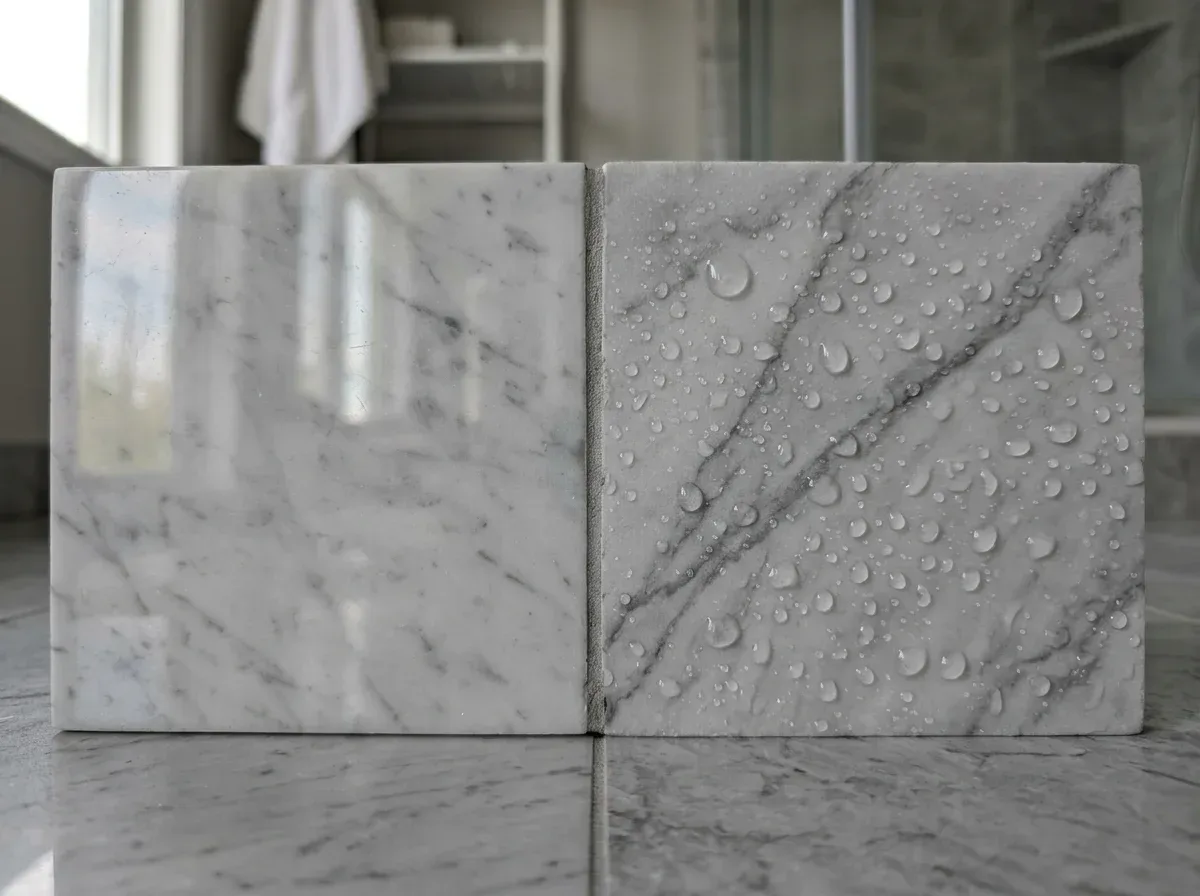
Honing
Honing means finishing marble at a certain grit level with fine diamond abrasives to give it a matte, silky surface. It grips better when wet than a polished surface, and soap marks are less visible. It is often preferred for hammam floors, areas in front of basins and shower areas.
Brushing
Brushing means working the surface of the stone with hard brushes to obtain a slightly wavy, textured surface. It provides a more pronounced grip than honing. It is suitable for walkways and wet areas of the hammam.
Anti-Slip Treatments
In some cases, anti-slip products that roughen the surface on a microscopic scale are used. These products should be chosen according to the type of stone and tested first on a small area; incorrect application can leave matte stains on the marble.
Central Marble Slab and Basins
The central marble slab is the most used and most heated surface of the hammam. People lie and sit on it, and exfoliation and foam massages are done there; therefore it must be non-slip and also smooth enough not to irritate the skin. A semi-matte honed finish is generally preferred on the central slab instead of a full gloss polish: the touch stays soft, but it does not slip like glass when wet.
The areas in front of the basins are where water constantly overflows and where soap and limescale accumulate the most. In these areas the limescale layer thickens quickly, creating a surface that is rough at the edges and slippery in the middle. Regular limescale cleaning around the basins and a surface treatment slightly more textured than the floor give the best results.
- Seal the cracks first: If honing is done without filling the cracks and opened joints in the central slab, water seeps through the cracks under the stone.
- Joints at the base of the basin: The joint between the basin stone and the floor is where soapy water accumulates the most; if a darkened joint cannot be restored by cleaning, it is renewed.
- Do not pour cold water on hot stone: Cold water, or water containing chemicals, should not be poured on hot stone; when a sudden temperature difference combines with chemicals, surface damage and cracks can occur in the stone.
Which Surface for Which Area?
Not every spot in a hammam calls for the same surface. The table below summarizes the surface choices we recommend most often:
| Area | Recommended surface | Why |
|---|---|---|
| Central marble slab | Semi-matte honed | Does not irritate the skin, slips less when wet |
| In front of basins | Honed or lightly brushed | Where water and soap accumulate the most |
| Walkways and wet floor | Brushed | Most pronounced grip |
| Wall and basin face | Polished or honed | Shine can be preserved since it is not walked on |
| Changing and resting area | Honed | Arrive with wet feet; it stays dry but doesn't slip |
Maintenance Plan for Businesses
In hotel, spa and commercial hammams, slipperiness matters both for guest safety and for the operator's liability. Once the surface has been treated correctly, regular maintenance preserves this safety:
- Every day: At closing, the floor is rinsed with plenty of water, the soap and oil film is removed with a cleaner suitable for natural stone, and the floor is dried with a squeegee.
- Every week: The areas in front of the basins and the joints are brushed, and early limescale buildup is checked; if the thin layer is removed before it thickens, no surface treatment is needed.
- Every few months: A deep machine cleaning is carried out; areas that begin to polish from foot traffic are re-honed with light pads to maintain grip.
- Once a year: During the general inspection, open joints, cracks and worn areas are identified and repaired before the guest rush begins, ahead of the season.
In Alanya, most hammams are located inside hotels and residential complexes and are almost never empty during the season. For this reason, the most suitable time for surface renewal and anti-slip treatments is before or after the season. When the work is planned section by section, the hammam does not have to close completely.
Preventing Slipperiness in Daily Maintenance

- At the end of the day, wash the floor with a cleaner suitable for the stone and rinse it thoroughly.
- Set up a towel and slipper system in massage and treatment areas to prevent oil from being carried onto the floor.
- Do not use cleaning products with a polishing effect.
- Remove limescale buildup at regular intervals, before it becomes thick.
- Place warning signs in wet areas and put absorbent mats at the exits.
Our Marble Honing Service for Hammams and Spas in Alanya

We remove the layer of soap, limescale and minerals that builds up on the central heated stone (göbek taşı), basins (kurna) and hammam floors, and restore worn marble by honing it. In wet areas, we care more about slip resistance than shine, and we finish the surface accordingly.
In hotel hammams and spa areas, we plan the work around the facility's schedule. Explore our Hammam Honing service.
The upper surface of the göbek taşı (heated central marble slab) is where people lie down, so a very rough surface would spoil comfort. For this reason, the göbek taşı is usually left with a soft sheen, while the walking area around it is given a more matte, grippy finish. The insides and edges of the kurnas (wash basins), on the other hand, should be cleaned regularly of limescale and soap buildup. — Expert Note