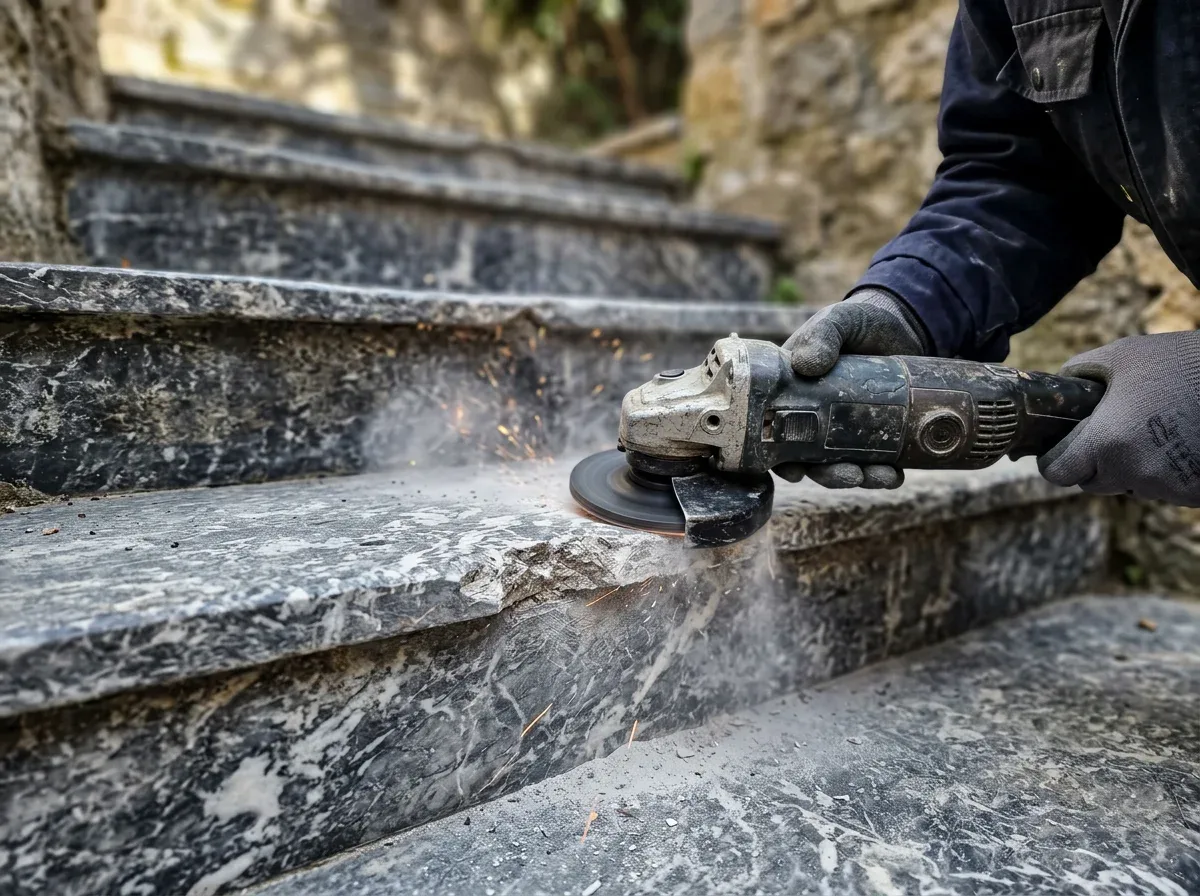
What to Do If Marble Steps Are Slippery
In short: Slipping on stairs is far more dangerous than slipping on a flat floor.
Marble steps pose a risk especially when wet, polished, or when the nosings are worn. In this article, we explain what makes steps slippery and how to improve safety without spoiling the appearance.
Why Are Steps Riskier Than Flat Floors?
A person who slips on a flat floor can often regain their balance; on stairs, only part of the foot rests on the step, and when a slip occurs the direction of the fall is downward. In addition, the part of the step that is stepped on most is the nosing ; this area is both the fastest to wear down and the fastest to become polished.
In apartment and housing complex entrances, villa staircases, and hotel steps in Alanya, the problem most often appears in the following situations:
- Outdoor steps in rainy weather: On outdoor steps that get wet in the rain, a thin layer of water forms on top of the stone, and foot grip is noticeably reduced, especially on polished surfaces.
- Returning from the pool or beach: When people come back from the pool or beach with wet feet, the water carried onto the indoor stairs suddenly makes steps that seem dry slippery.
- Right after cleaning: When steps are used before they have dried after cleaning, the moisture and detergent residue on the surface increase the risk of slipping.
- Mirror-like shiny marble: Polished marble that has been used for years becomes even shinier from foot friction, especially at the nosing, and provides almost no grip when wet.
First, Look at the Source of the Slipperiness
Treatments applied without knowing the cause of the slipperiness often fail to solve the problem; first, you need to understand what is making the step slippery.
- The surface is too glossy: Polished marble reduces grip when wet; on a smooth surface, water forms a thin film and the shoe sole does not make full contact with the stone.
- There is a film on the step: Cleaning products with shine additives, polish residue, or a film of dirt cause slipperiness; this layer behaves like soap, especially when stepped on with a wet sole.
- The nosing has become rounded: A worn nosing is both slippery and has lost the edge where the foot can get a grip; when going down, the foot easily slides off this rounded edge.
- Water pools: If the slope of outdoor steps is insufficient, water stays on the step; a surface that remains wet for a long time after rain carries a constant risk of slipping.

Solution Options
1. Proper Cleaning
The first step is to remove the shine-additive and dirt film from the steps. Cleaning and rinsing with a stone-appropriate cleaner that leaves no film noticeably reduces slipperiness on many staircases. Stairs should not be mopped wet during peak usage hours, and should be allowed to dry after cleaning.
The most common mistake on stairs is using the "shine-enhancing" products meant for floors on the steps as well. After drying, these products leave a thin layer of wax or polymer; you don't feel any problem with dry shoes, but when stepped on with a wet sole, the layer behaves like soap. For steps, a pH-neutral cleaner that leaves no film and a well-wrung cloth are enough.
2. Honing
The top surface of the steps is honed to give them a matte, silky texture. This increases grip when wet. By leaving the vertical face of the step (the riser) polished, the overall look of the staircase can be preserved; this way you get a staircase that is both stylish and safe.
3. Anti-Slip Grooves at the Nosing
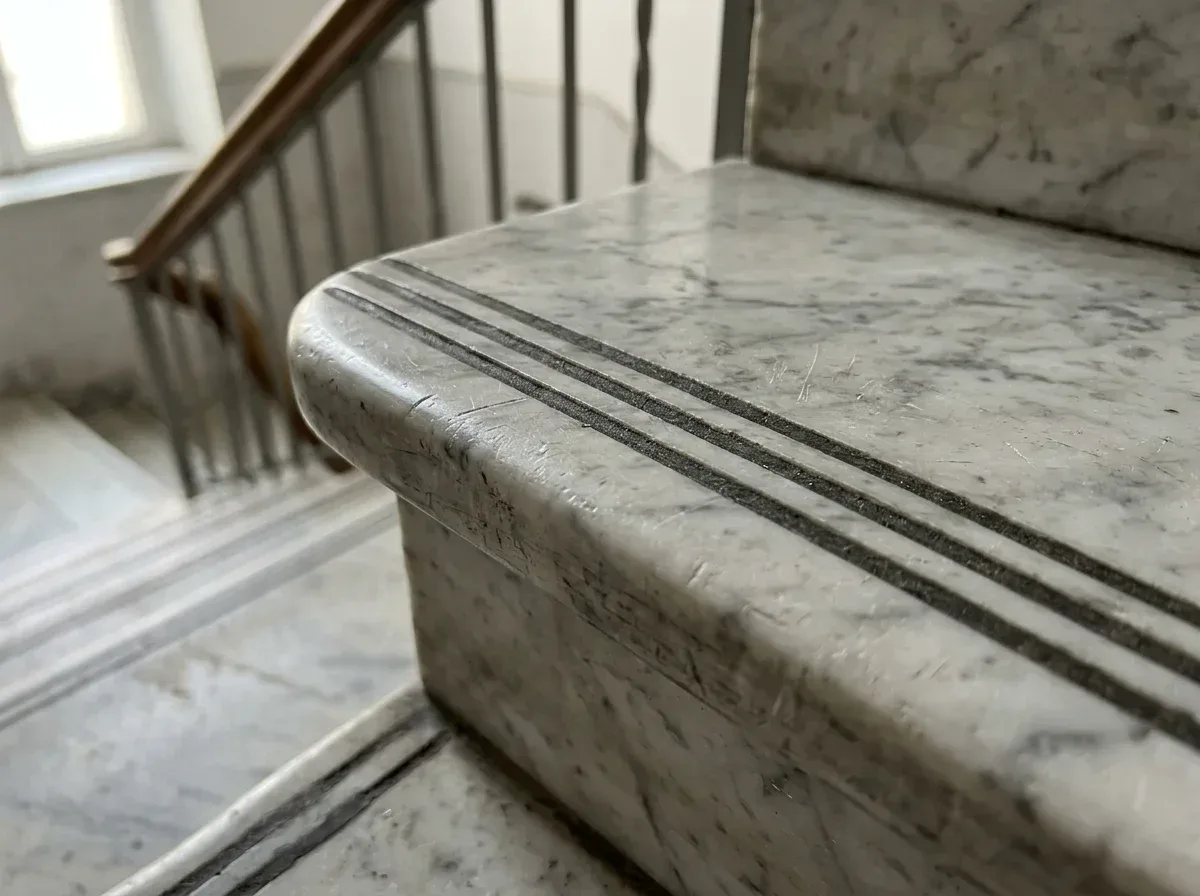
Thin, shallow grooves can be cut into the stone a few centimeters back from the step nosing. These grooves create a line where the foot can get a grip. Since they are made in the same material as the stone, they do not spoil the appearance and, unlike adhesive strips, do not peel off over time. The depth and spacing of the grooves are determined according to the thickness of the stone.
4. Anti-Slip Strips and Profiles
This is a quick and cost-effective solution. However, strips get dirty over time, lift at the edges, and spoil the appearance of the marble. Metal or rubber nosing profiles, on the other hand, are applied with adhesive or screws; they may require drilling holes in the stone.
5. Restoring Worn Nosings
On steps whose nosings have become rounded, chipped, or thinned, the nosing can be repaired and reshaped. Broken pieces are filled in with a color-matched filler, the nosing is reprofiled, and the top of the step is honed.
Special Note for Outdoor Steps
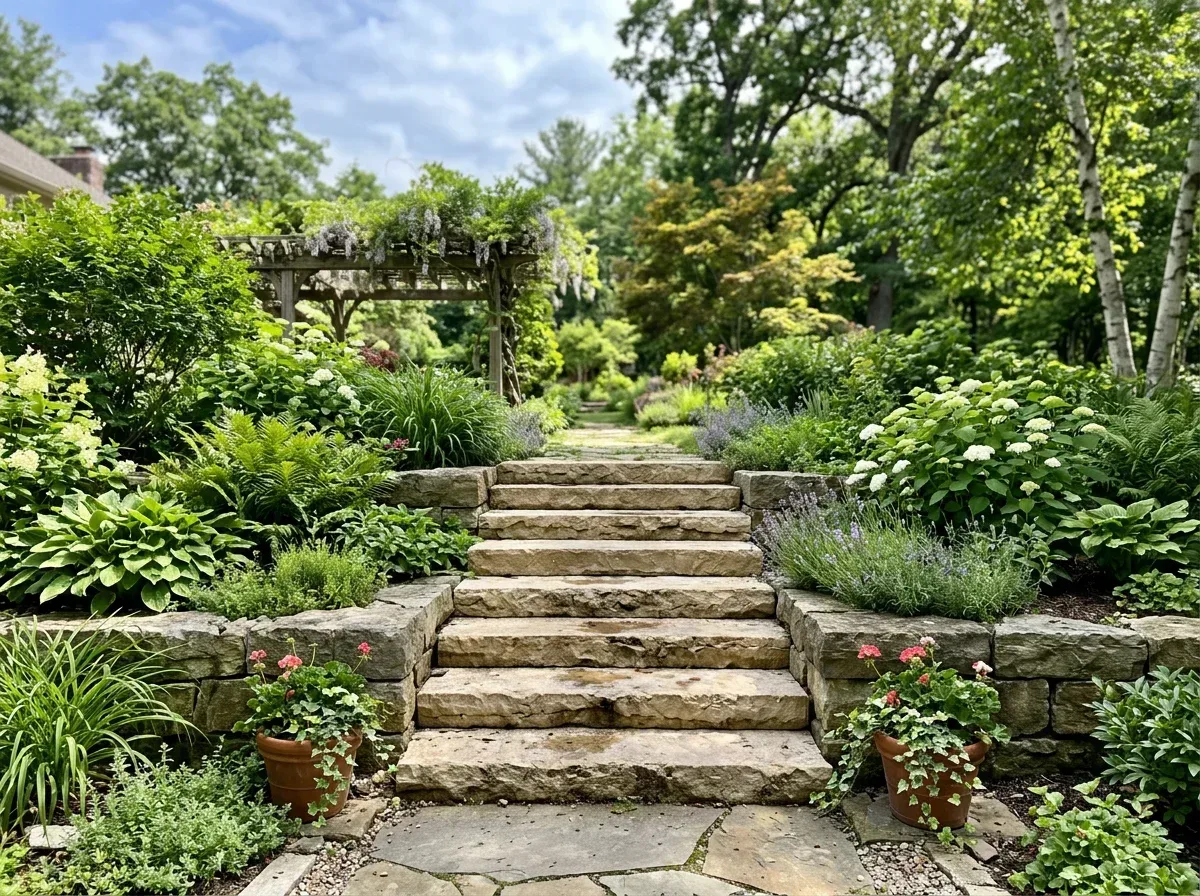
On outdoor steps, lasting safety is achieved with a textured stone surface rather than a glossy one.
- Brushed or antiqued marble and travertine: A textured surface increases grip; brushing removes the softer parts of the stone, leaving a light roughness for the foot to grip.
- Flamed (burnt) granite: It is one of the most slip-resistant options for outdoor steps; the flame-treated surface gains a rough texture and provides grip even when wet.
- Patinato: Antiquing and brushing provide a natural look and good grip; the softly wavy surface looks stylish and is safer when wet.
Existing polished outdoor steps can be turned into a slip-resistant surface by brushing or antiquing, without removing them.
Which Solution for Which Step?
Where the staircase is located and how it is used determine the most suitable solution. The table below summarizes the situations we encounter most often:
| Staircase | Common problem | Our recommended solution |
|---|---|---|
| Villa indoor staircase | Polished surface, wet feet after the pool | Honing of the step top, riser stays polished |
| Apartment and housing complex entrance | Getting wet in the rain, heavy traffic, worn nosing | Nosing repair, anti-slip grooves, honing |
| Garden and pool stairs | Constant wetness, algae | Brushed, patinato or flamed granite finish |
| Hotel and commercial building stairs | Heavy foot traffic, wetness during cleaning | Honing + grooves, a cleaning routine that leaves no film |
| Short-term temporary measure | Situations that need an immediate solution | Anti-slip tape (until a permanent solution is in place) |
How Is the Application Done?
Working on stairs requires more careful planning than working on a flat floor, because the stairs are often the only route through a building. The sequence we usually follow is as follows:
- Assessment: First, the soundness of the steps, nosing wear, cracks and loose slabs are checked; this is the stage where we determine which steps need repair.
- Repair: Next, broken nosings and cracks are filled with color-matched filler and loose steps are secured; the surface treatment is only applied to sound stone.
- Surface treatment: After the repair, the tops of the steps are honed or brushed; if needed, grooves are cut behind the nosing to increase traction.
- Final check: Finally, traction is tested on the wet surface, the risers and skirting areas are cleaned, and the stairs are made ready for use.
The work can be done step by step or by skipping every other step, so apartment and hotel stairs remain usable without being closed off completely. Since we use a wet method, no dust is spread, but wet steps are marked for the duration of the work.
Maintaining Safety in Daily Use
How long the result lasts depends largely on how the stairs are used and cleaned every day.
- Place an absorbent mat at the entrance: An absorbent mat placed at the stair entrance, especially on the pool and garden side, greatly reduces the amount of water carried onto the steps on people's feet.
- Do not mop during busy hours: Do not mop the steps during busy hours; waiting for them to dry after cleaning prevents slips on damp stone.
- Check the lighting: When the stairwell is adequately lit, the step nosing is clearly visible and people going down can step with more confidence.
- Re-hone when necessary: When the shine on honed steps begins to return (usually every few years under heavy use), a light re-honing is sufficient.
Additional Safety Tips for Stairs

- Place an absorbent mat at the top and bottom of the staircase.
- Make sure the stair nosings are clearly visible; on single-color marble in particular, the nosing line may go unnoticed.
- Make sure the lighting illuminates the steps without casting shadows.
- Make sure the railings and handrails are sturdy and continuous.
Our Stair and Step Grinding Service in Alanya

We repair and grind worn step nosings, chipped edges and slippery stair surfaces. For safety at building entrances and on exterior stairs, we recommend anti-slip grooves or a suitable surface finish.
For apartment and housing complex stairs, we plan the work section by section without interrupting foot traffic. Explore our Step Grinding service.
Outdoor steps are exposed to rain, dust and sun. Polished marble is strongly discouraged here. More suitable options are: — Expert Note