Floor Grinding and Polishing Glossary
In short: When reading a grinding and polishing quote or talking to the contractor, you hear many technical terms.
This glossary explains the most common terms used in marble, granite, travertine and concrete floor work in plain language. Keep it at hand when comparing quotes and to understand what you are having done.
A–E
Aggregate: The gravel and sand particles inside concrete. How much aggregate is exposed in concrete grinding determines the look of the floor.
Flamed finish: Treating the surface of granite with high heat to make it rough. It provides slip resistance outdoors.
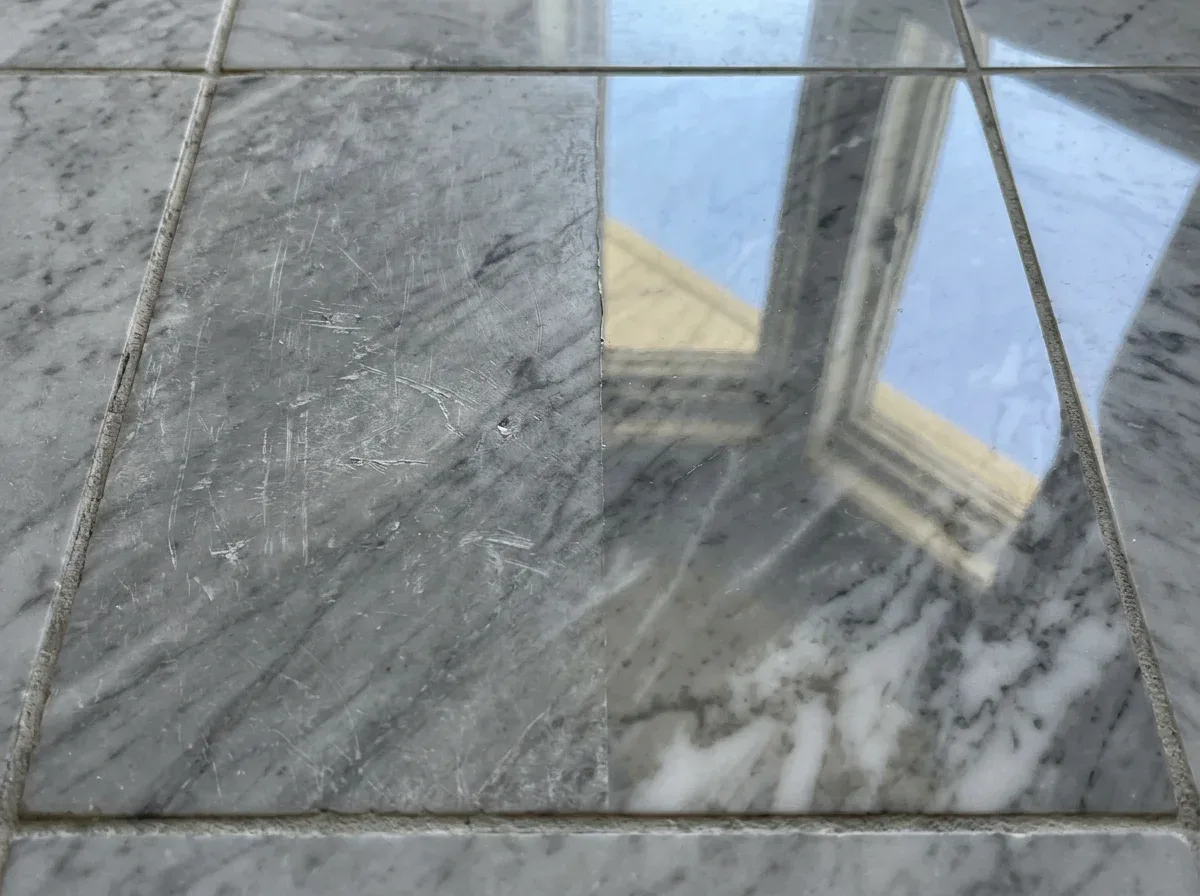
Etching: The dull area left on marble by acids such as lemon, vinegar or limescale remover. It is not a stain but surface damage.
Drop test: Placing a drop of water or oil on the stone to check whether its absorbency is intact and the impregnating sealer is working.
Densifier (hardener): A liquid product that densifies and hardens the top layer of concrete. It stops dusting.
Joint: The filled line between slabs or tiles. In concrete, it is a channel cut to control cracking.
Lippage: When the edges of slab joints sit higher or lower than each other; the everyday term for height difference.
Impregnating sealer: A water- and oil-repellent protective product that penetrates the stone's pores. It does not form a layer on the surface.
Tumbled: Giving the stone a rounded-edge, worn look.
F–K
Film-forming product: A polish, varnish or coating that leaves a layer on top of the stone. It wears over time and may yellow.
Brushing: Giving the stone a slightly wavy texture with abrasive brushes.
Gloss (gloss value): The shininess of a surface as measured by a device.
Pore: The small voids inside the stone. They are noticeable in travertine.
Honing: Leaving the stone smooth but matte.
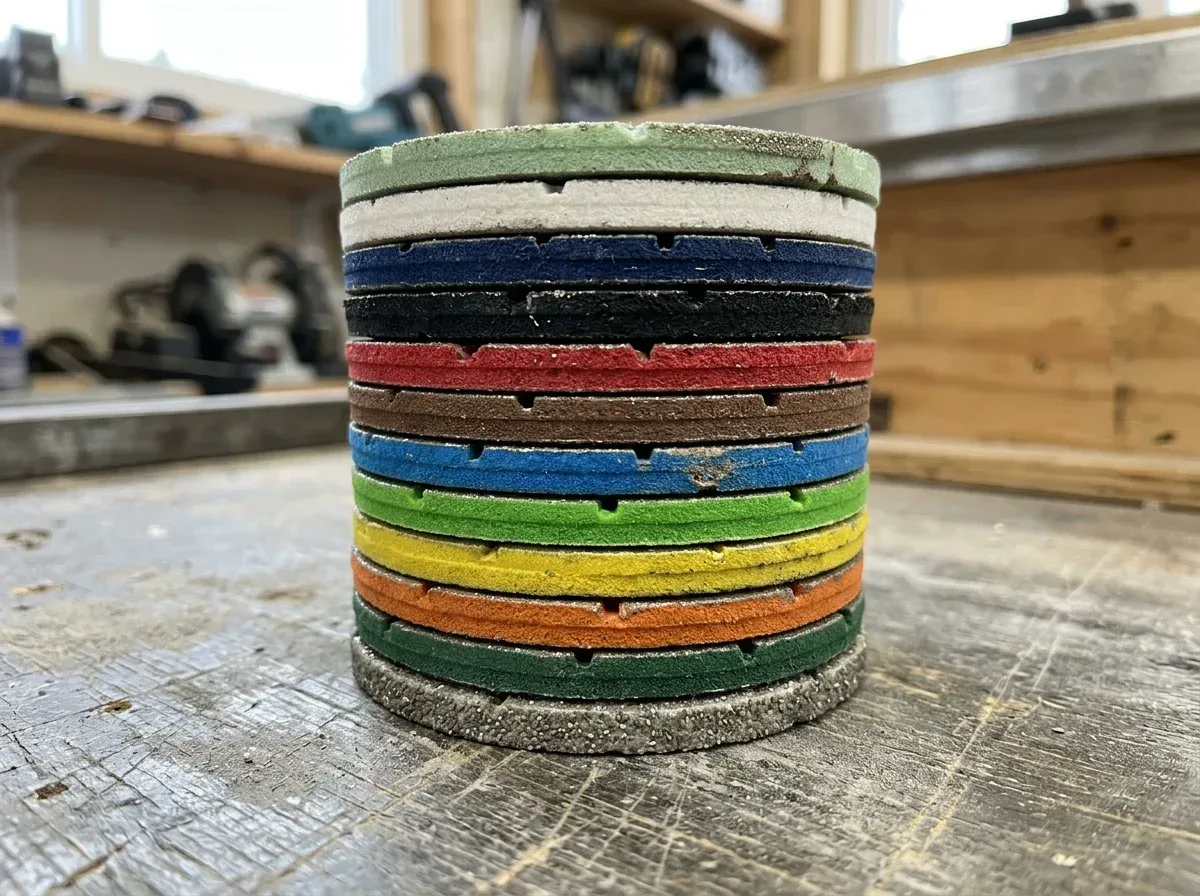
Step: Each stage in grinding, according to the fineness of the abrasive used.
Hollow slab: A slab whose mortar or adhesive underneath has come away and that sounds hollow when tapped.
Height difference: Slabs sitting at different heights relative to each other.
Crystallization: A method that hardens and polishes the top surface of marble through chemical and mechanical treatment.
Grit: A number indicating the size of the diamond particles in the abrasive. A low number is coarse, a high number is fine.
Curing: The time it takes for a product or concrete to reach full hardness.
L–P
Poultice: An absorbent paste applied to draw a stain out of the stone.
Metal-bond diamond: An aggressive abrasive used in coarse grinding, in which the diamonds are embedded in metal.
pH neutral: Neither acidic nor alkaline; a safe cleaning product for natural stone.
Pad: A round abrasive disc fitted to the grinding machine.
Polishing powder: A fine abrasive powder used in the final stage for shine.
Patinato: A soft, satin-look version of brushing.
Planetary machine: A machine with multiple discs that grinds large areas evenly.
Commonly Confused Terms
| Terms | Difference |
|---|---|
| Grinding / Polishing | Grinding removes material from the stone surface to eliminate scratches and lippage; polishing is the creation of the shine in the final stages of grinding. |
| Sealer Coating / Crystallization | A coating is usually a film applied onto the surface; crystallization, on the other hand, chemically hardens the marble's own surface. |
| Impregnating Sealer / Hardener | An impregnating sealer repels water and oil; a hardener densifies the concrete and stops dusting. |
| Honed / Matte | Honed is the smooth matte finish obtained by stopping the grinding stages early; "matte" is just a general description of appearance. |
| Stain / Acid Etching | A stain is a substance absorbed into the stone and is drawn out with a poultice; acid etching is surface wear and requires polishing. |
| Brushed / Patinato | Both are textured surfaces; patinato is the softer one with a satin finish. |
Terms for Surface Types
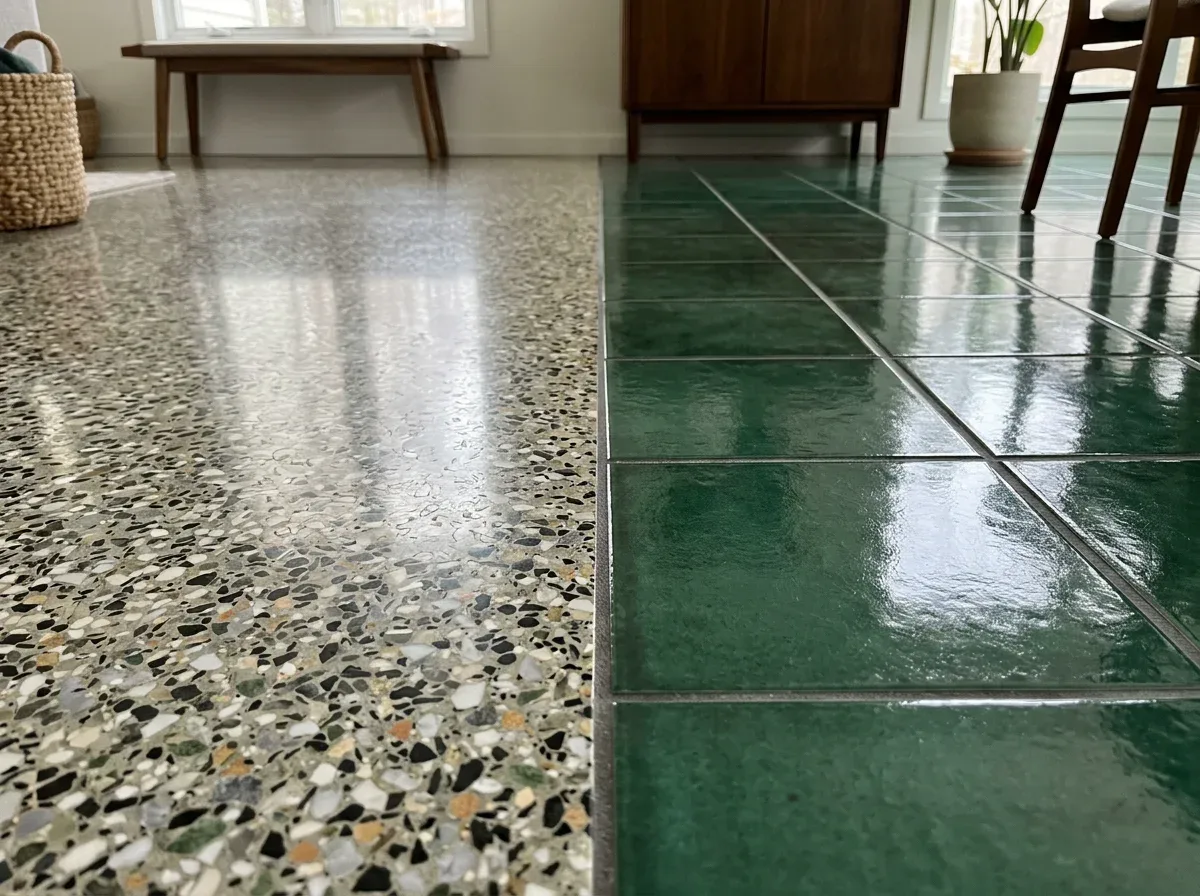
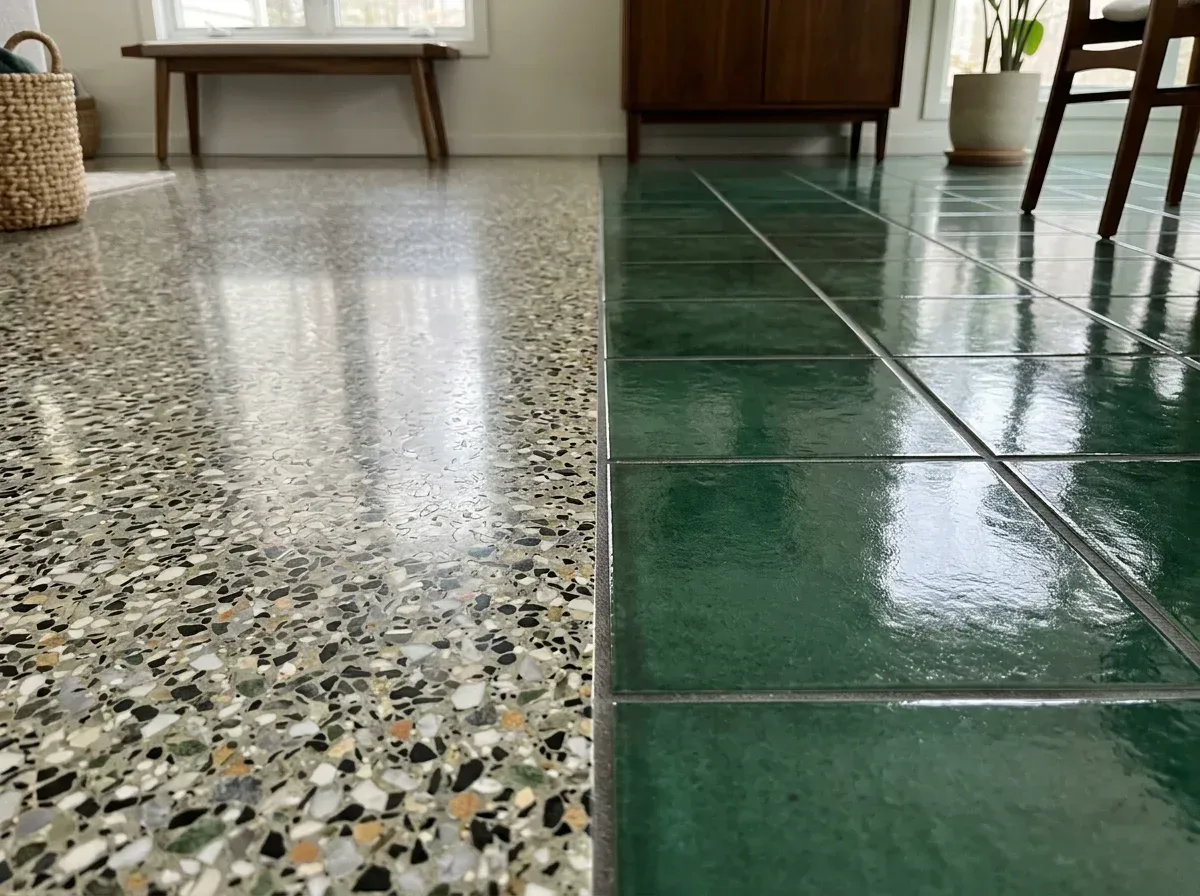
Quotes and catalogs use terms not only for processes but also for material types. Terrazzo is a floor made by mixing stone chips with a binder and pouring it, and it can be ground; mosaic tile is terrazzo produced in a factory as tiles. Glazed tile and ceramic tile (çini) are ceramics whose surface is covered with a thin layer of glass and cannot be ground. This distinction directly determines which process is possible for your floor.
What to Watch For When Reading a Quote
Reading the terms in grinding quotes correctly lets you compare quotes from different companies on the basis of truly the same job.
- Ask what the word "polish" means: Ask whether the word "polish" (cila) refers to grinding and polishing or to a product applied onto the surface; the latter wears off over time and can yellow.
- Check the stages and grit: Check whether the number of stages and the starting grit are specified; starting with a coarse grit indicates that lippage and deep scratches will be removed.
- Find out the type of impregnating sealer: If the quote says impregnation is included, find out the type of product; whether it is water-repellent or both oil- and water-repellent determines the scope of protection.
- Check the repair items: Check whether repair items (filling, hollow tiles, joints) are listed separately; an item that is not listed may turn up later as extra work.
You Can Ask Us in Alanya
On every job we survey in Alanya, we explain the terms in the quote one by one. If there is a concept you don't understand in a quote from another company, you can ask us too; we will explain in plain language what each process means and whether it suits your floor.
R–Z

Resin-bond pad: An abrasive in which the diamonds are embedded in resin, used in the medium and fine grit stages.
Color enhancer: A type of impregnating sealer that darkens the tone of the stone.
Shrinkage: The contraction of concrete as it dries; a common cause of hairline cracks.
Riser: The vertical face of a stair step.
Glaze: The glassy layer on tile and ceramic tiles.
Wet grinding: A grinding method carried out with water, which turns the dust into slurry.
Terrazzo: A floor made by mixing stone chips with a binder and grinding it.
Efflorescence: Salt rising to the surface of stone or concrete and leaving a white mark.
Walking path: The strip of floor that is stepped on the most and dulls the fastest.
Our Marble Grinding Service in Alanya

We restore marble floors that have gone dull, become scratched, or developed height differences between slabs, using wet grinding that keeps dust down. We choose every stage, from coarse grinding to polishing, according to the type of stone, and if needed we repair cracks and joints as part of the same job.
We inspect your floor on site and tell you clearly whether it needs grinding or just polishing. Explore our Marble Grinding service.
A good quote is one that can explain its terms to the customer. If you come across a word you don't understand, don't hesitate to ask; the right answer is the start of the right job.
Frequently Asked Questions
01Is sanding the same as polishing?
02What is the difference between sealer finish and crystallization?
03Is honed the same as matte?
04What if there are terms in the quote that I don't understand?
05Does a higher grit number always mean a shinier surface?
06Is a planetary machine used for every job?
Related Articles
- What Is Marble Honing and How Is It Done? A Guide for Your Home's Floors
- Marble Honing Stages: Diamond Pad Grits from Coarse Grinding to Polishing
- Impregnation, Crystallization and Hardener: Which One and When?
- Questions to Ask When Choosing a Marble Honing Company
- The Difference Between Marble Buffing and Marble Polishing