Maintenance of Floors in Common Areas of Residential Complexes and Apartment Buildings
In short: The entrance lobby, staircases and common areas of a residential complex make the first impression of the building.
These areas are used by dozens, sometimes hundreds of people every day, and are walked on with outdoor shoes. Properly planned maintenance preserves their appearance and postpones major renovation costs. This article is written for complex and apartment building managers.
Challenges of Common Areas
Because of heavy traffic, different types of stone and changing staff, common areas wear out much faster than floors inside homes.
- Outdoor shoe traffic: Sand, dust, mud and small stones are carried straight onto the floor; underfoot they act like sandpaper, dulling the polish and leaving scratches.
- Different surfaces: The entrance lobby has marble, the staircase has granite, the pool surroundings have travertine and the car park has concrete; each needs different cleaning and care.
- Uninterrupted use: The area is never completely empty; maintenance and polishing work must be planned section by section so that residents' passage is not disrupted.
- Different cleaning staff: As staff change, the risk of using the wrong product increases; an acidic cleaner can leave dull stains on marble in a short time.
- Budget and decision processes: Work is planned with the approval of the management board and residents; therefore, anticipating maintenance needs in advance and reflecting them in the budget saves time.

Priorities by Area
Entrance Lobby
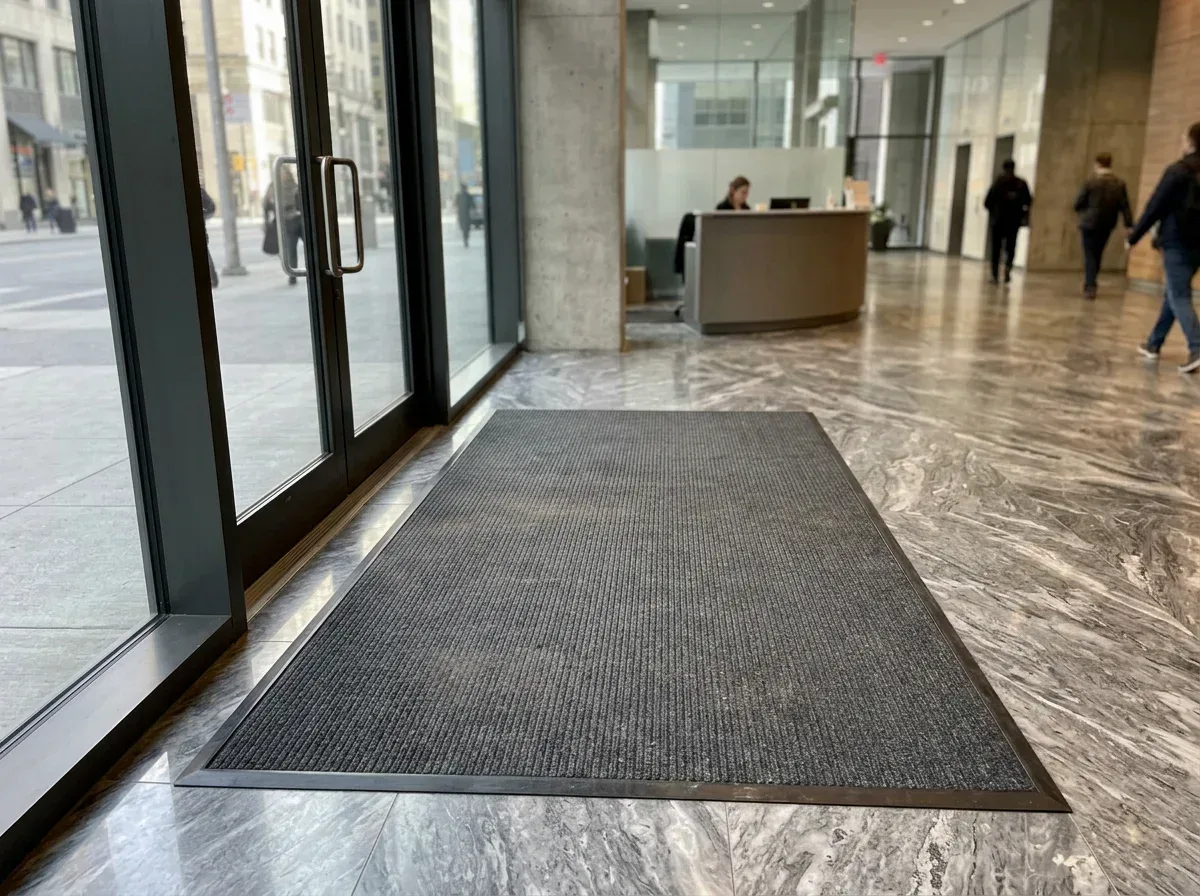
- Outdoor and indoor mat system: Using a dirt-trapping mat outside and an absorbent mat inside catches most of the sand and moisture carried in on shoes before it reaches the marble.
- Daily dry and damp cleaning: Sand is first removed by sweeping or dry mopping, then a damp mop is passed over; this way the sand is not dragged across the stone and does not leave scratches.
- Annual shine refresh: Dullness that develops over time on heavily walked paths can be removed with a light polish once a year, without the need for resurfacing.
- Comprehensive resurfacing: A comprehensive resurfacing done every few years removes accumulated scratches and wear, bringing the lobby close to its first-day appearance.
Staircases
On staircases, safety comes before appearance; stair nosings and slip resistance are at the center of maintenance.
- Checking stair nosings: Wear and chips are checked regularly on the stair nosings, which bear the most load; progressing damage both spoils the look and creates a tripping hazard.
- Slip resistance first: On staircases, a honed, i.e. matte, surface is preferred over glossy polish; it gives better grip when stepped on with wet shoes.
- Safe wet cleaning: In wet cleaning, work is done on only one side of the staircase and a warning sign is placed; this way residents can go up and down safely on the dry side.
Elevator Landings and Corridors
Elevator landings and corridors are among the fastest-wearing points of the complex because of moving goods and constant foot traffic.
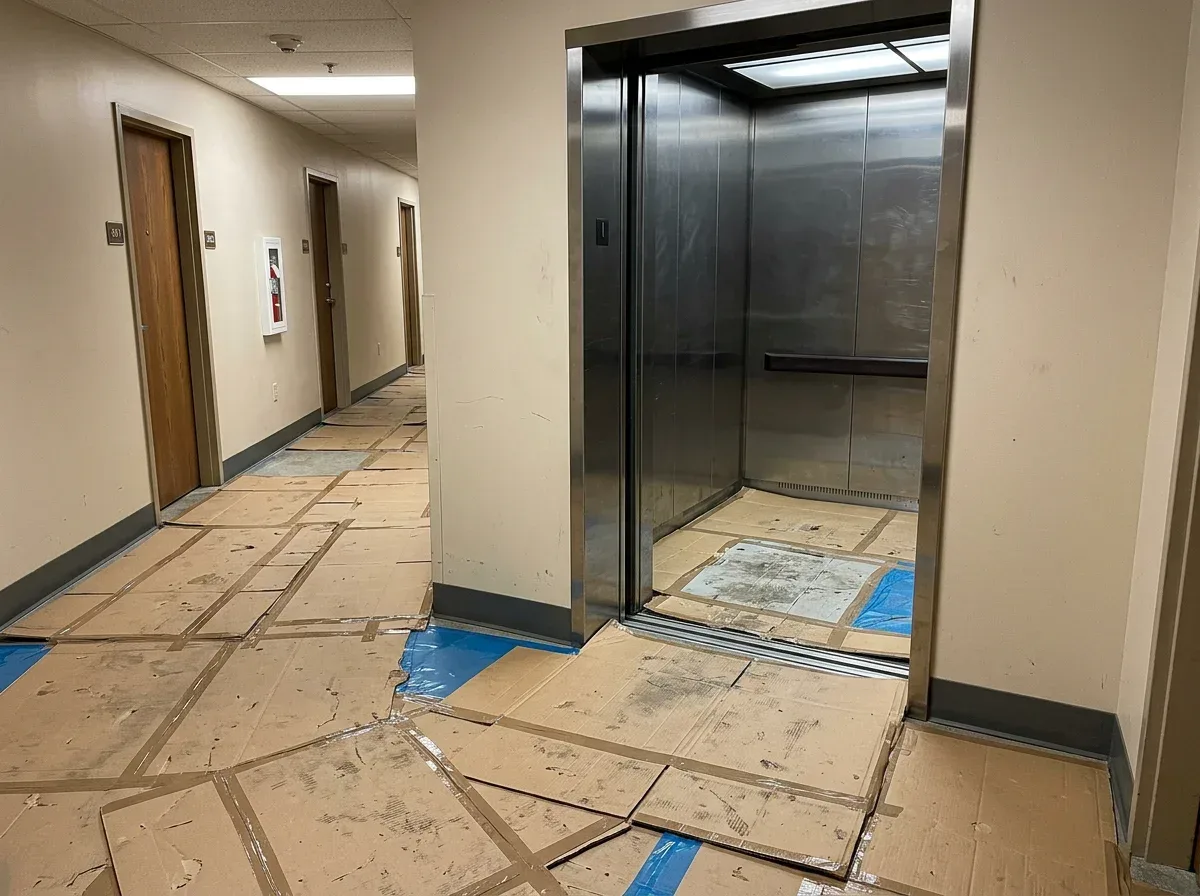
- Protection on moving days: On moving days the floor is covered with cardboard or protective sheets; this way heavy items and wheeled carriers do not scratch or break the stone.
- Monitoring wear in front of elevators: Since everyone steps on the same spot in front of elevator doors, dullness starts here first; if noticed early, it is remedied with local refreshing.
Pool Surroundings
The stone around the pool is constantly exposed to chlorinated water, sun and wet feet, so cleaning and protection are carried out together.
- Regular rinsing with fresh water: If the chlorine and salt in pool water remain on the stone surface, they wear it down over time; regular rinsing with fresh water removes these residues.
- Algae and limescale control: Algae builds up in shaded, constantly wet areas and limescale on edges where water splashes; if not cleaned early, a slippery and stained surface forms.
- Slip resistance and impregnation: Keeping the surface slip-resistant ensures safe walking with wet feet; impregnation, in turn, reduces the stone's absorption of water and stains.
Car Park
Car park concrete wears down from vehicle traffic, oil and dust; regular cleaning and early intervention delay major repairs.
- Regular machine sweeping: Regular cleaning with a sweeping machine prevents sand and dust crushed by tires from abrading the concrete and being carried into the building.
- Early action on oil stains: Oil stains soak into the pores of the concrete the longer they wait; a stain cleaned on the day it drips comes out much more easily and without a trace.
- Resurfacing against dusting: If the floor is dusting, concrete grinding and a hardener are applied; once the weak top layer is removed and the surface strengthened, the dusting stops.
Simple Rules for Cleaning Staff
Giving staff a written and visual list of rules is the cheapest maintenance investment. It is enough for the list to include the following items.
- Dry cleaning first: Dry cleaning must always be done before wet cleaning; otherwise the mop drags sand across the floor and fine scratches form on the stone.
- Approved pH-neutral products: Only pH-neutral stone cleaners approved by management are used, so the wrong product never reaches the floor even when staff change.
- No acidic or bleach-based products: Descalers, bleach and vinegar are not used; these products burn the polish on marble and travertine and leave dull stains.
- Wring the mop thoroughly: The mop is wrung out well and the floor is not soaked; excess water seeps into the joints and the pores of the stone, creating a risk of stains and slipping.
- Warning sign on the stairs: A warning sign is placed when working wet on the stairs, so residents notice the wet steps and slip accidents are prevented.
- No oily or waxy polishes: Oily and waxy polishes are not used; although they give a short-lived shine, they leave a slippery layer that traps dirt and must be stripped off later.
Moving and Renovation Periods
The moments that damage floors the most in housing complexes are furniture moving and apartment renovations. Setting a few simple rules for these periods largely protects the floors of common areas.
- Cover elevators and corridors: On moving days, elevator and corridor floors should be covered with cardboard or protective sheets, so heavy items and carrier wheels do not scratch the stone.
- Rules for debris removal: The transport of debris and materials by apartments undergoing renovation should be subject to rules; dragging bags across the floor and spilled mortar leave permanent marks on the floor.
- Document the damage: Any damage should be photographed and the responsible party identified, so the repair cost can be covered by the party that caused the damage rather than from the shared budget.
Annual Maintenance Schedule Suggestion
Dividing maintenance into daily, weekly, monthly and annual tasks helps postpone the need for a comprehensive restoration for a long time.
- Daily: Dry and damp cleaning is carried out, and it is checked that the mats are in place and clean; most of the sand carried onto the floor is removed with this routine.
- Weekly: Stairs and corridors are cleaned with a machine; joint and surface dirt that a hand mop cannot remove is thus taken off before it builds up.
- Monthly: The parking garage is swept and washed, and the pool surroundings are checked for algae, limescale and broken tiles.
- Yearly: The shine in the entrance lobby and on the stairs is refreshed, the sealer is checked to see whether it still repels water, and it is renewed if necessary.
- Every few years: Comprehensive grinding and repair is carried out; accumulated scratches, broken tiles, and deteriorated joints are all remedied together at this stage.
Budget Planning
Instead of one large renovation done all at once, dividing the work into zones and spreading it over several years makes the budget easier to manage. For example, the entrance lobby in one year, the stairs the next year, and the parking garage the year after.
Maintenance Summary by Zone
| Zone | Typical flooring | Priority | Comprehensive renovation |
|---|---|---|---|
| Entrance lobby | Marble | Mat system, shine | Grinding every few years |
| Staircases | Granite, marble | Slip resistance, nosing check | Honing and repair |
| Corridor and area in front of the elevator | Marble, granite | Protection during moving | Zonal refresh |
| Pool surroundings | Travertine | Salt, limescale, algae | Grinding, filling, impregnation |
| Car Park | Concrete | Dusting, oil stains | Concrete grinding, hardener |
When Requesting a Quote
The details requested at the quote stage clarify the scope of the work and show in advance how residents will be affected during the work.
- Price and duration zone by zone: Ask for a separate price and duration for each zone; this makes prioritization easier, and the work can be spread over several years to fit the budget if necessary.
- Working hours and access: Ask which hours the work will take place and how residents will pass through the section being worked on; without a plan, complaints and disruptions are inevitable.
- Request the products in writing: Request in writing the products that will be used and the cleaning products the staff will use afterwards; this list can be turned directly into staff rules.
- Dust and slurry control: Find out how the dust or slurry produced by the honing will be collected; uncontrolled work carries dirt into elevators, doors, and apartments.
- Previous complex projects: Ask for examples of residential complex projects done before; a company that has worked on a similar scale manages sectioning and resident communication better.
How We Work with Residential Complexes in Alanya
In complexes in Alanya with a high share of holiday homes, common areas are very busy in the summer months and almost empty in winter. For this reason, we usually schedule comprehensive honing and renovation work for the winter period, and carry out shine refreshing and pool surround maintenance before summer. We offer complex management a separate quote for each area and an annual maintenance calendar, and we notify them of the work days in advance so they can be announced to residents.
Communication with Residents

Floor work carried out in a shared area affects all residents; clear, advance notice reduces complaints.
- Announce the dates and times: A work schedule announced in advance allows residents to adjust their plans, such as moving furniture or having guests, accordingly.
- State the restrictions clearly: If the restrictions on using the stairs and elevator are known, no one will unexpectedly run into a wet or closed-off area.
- Schedule noisy work during working hours: If the noise of the polishing machines is scheduled during working hours, residents' rest hours will not be disturbed.
Our Crystallization Polishing Service in Alanya

On marble floors that have lost their shine after honing, or whose shine has faded but have no deep damage, we use crystallization polishing to restore the surface's gloss and increase its durability. It is a method that extends the maintenance interval in heavily used areas such as hotel lobbies, shops, and apartment entrances.
We show you on site whether crystallization polishing or honing is the right choice for your floor. Explore our Crystallization Polishing service.
In common areas, what protects the floor most is not an expensive renovation, but the right doormat at the entrance and the right cleaning product in the hands of the staff.